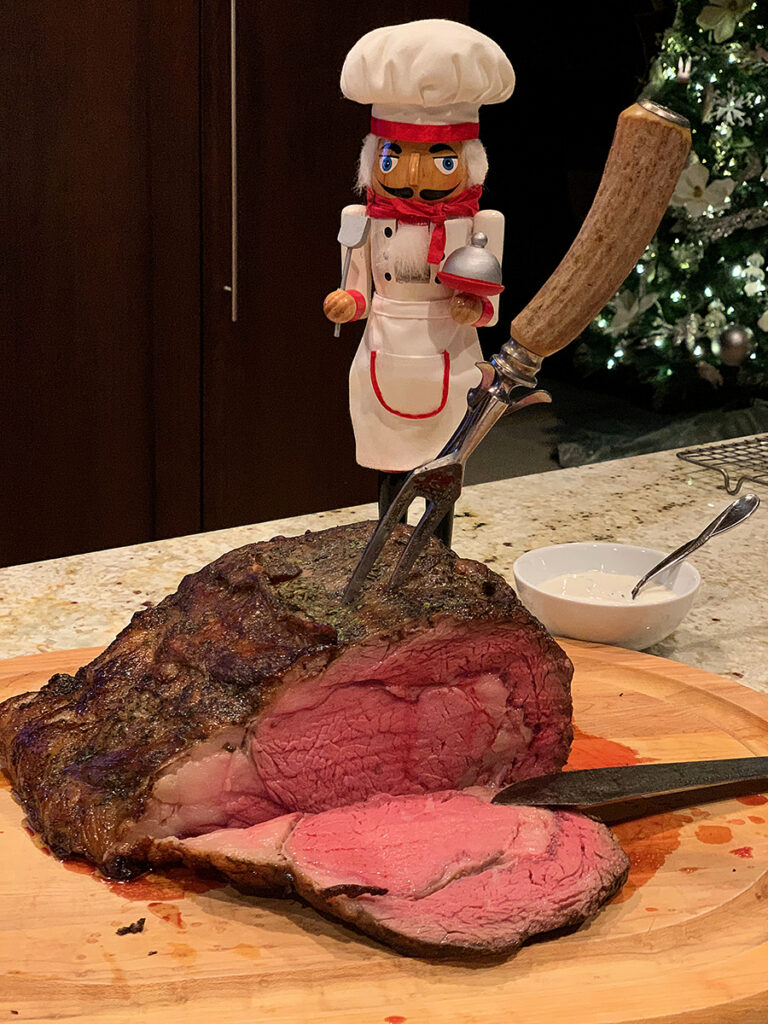
Winner Winner, Prime Rib Dinner
Sorry chicken or turkey, but a prime rib roast is one of the most decadent main dishes to serve your family for the holidays, and with sous vide, it’s also the easiest.
Top 3 Reasons to sous vide your next prime rib roast
Sous vide cooks evenly all the way through, so it won’t be raw in the middle and overcooked on the edges.
You start earlier, which frees you up to prep and cook your other dishes, or socialize with your guests if you’re lucky and they brought the sides.
This sous vide rib Roast freezes and reheats via the months later, and is just good as the first day. Just ask Pepé.
Either way, you will never want to cook it any other way.
Some good tools to invest in:
You spend a lot of money on a mixer, oven, airfryer, insta-pots and so on, so why not the tool that will help you cook so many things the best and easiest way possible?
A Sous Vide Device. These are the top two brands: Joule by ChefSteps/Breville – which is my personal favorite, and Anova.
While I didn’t have container made for sous vide for the first few years, I wish I had. Before I bought this, I cooked most things in my 6 quart dutch oven, and a large cooler for a couple of larger meats like a Cut up 1/2 Smoked & 1/2 Not Turkey and this Prime Rib Roast.
Having a Vacuum Sealer is very helpful even if you don’t have a sous vide device because it preserves food without all the air, hence slowing down the possibility of freezer burn.
Scroll below recipe to read how to cook a prime rib roast
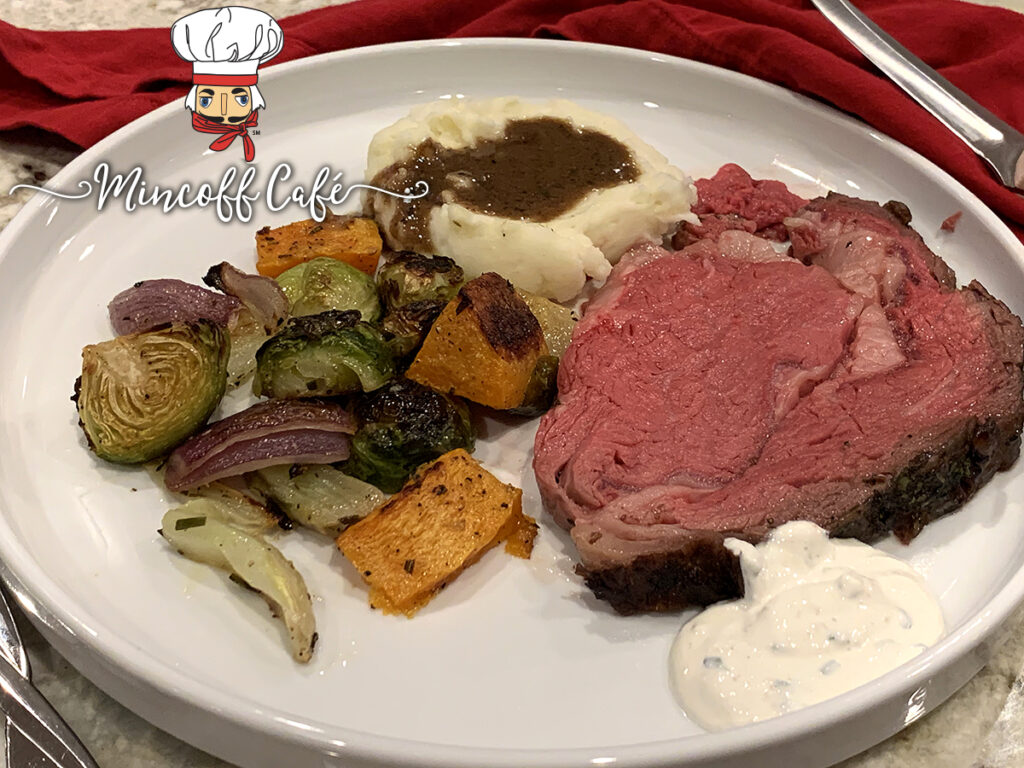
Side dishes for Prime Rib Roast Dinner
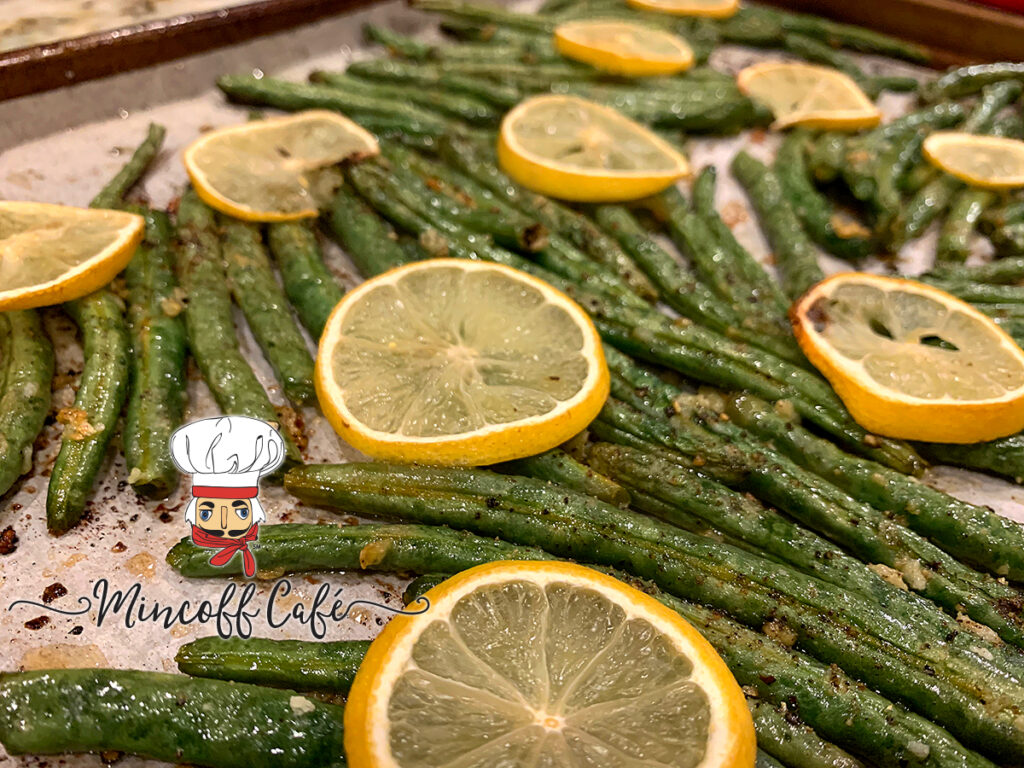
Lemony Roasted Green Beans
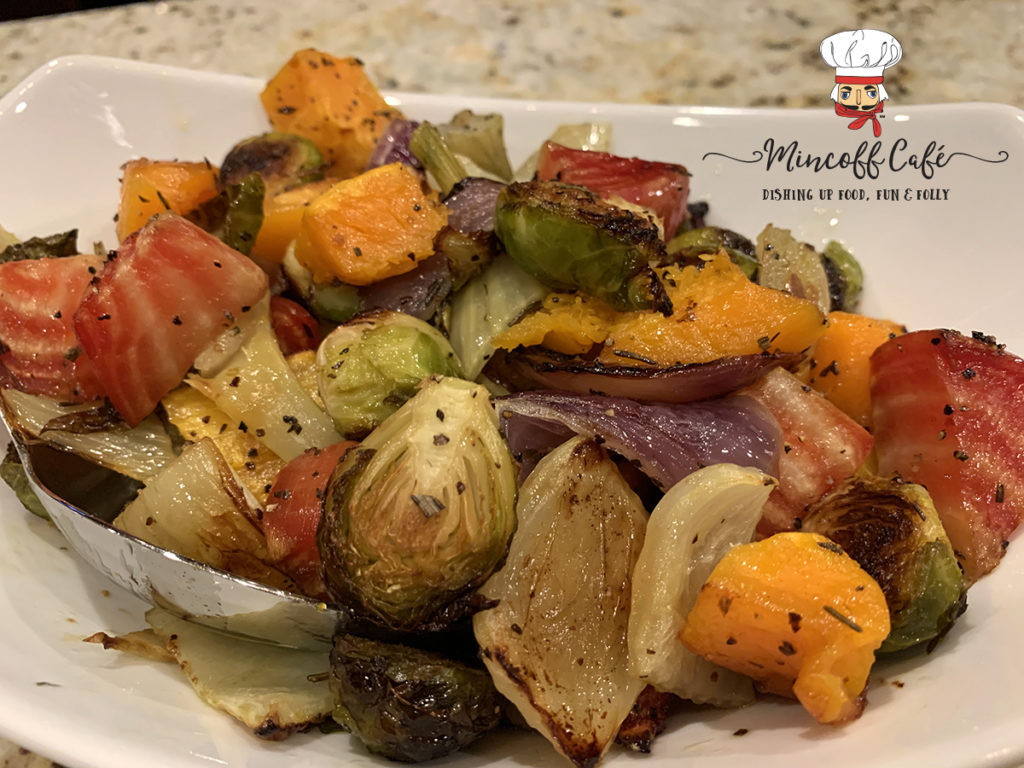
Colorful Roasted Veggies
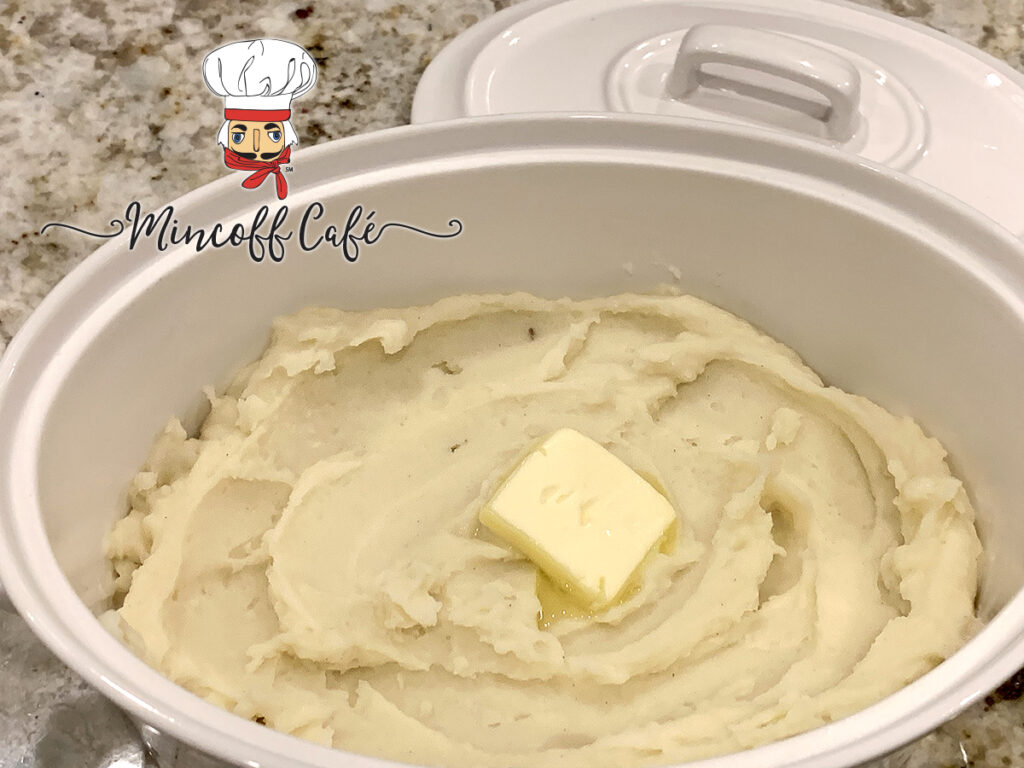
Mashed Potatoes that you can make ahead
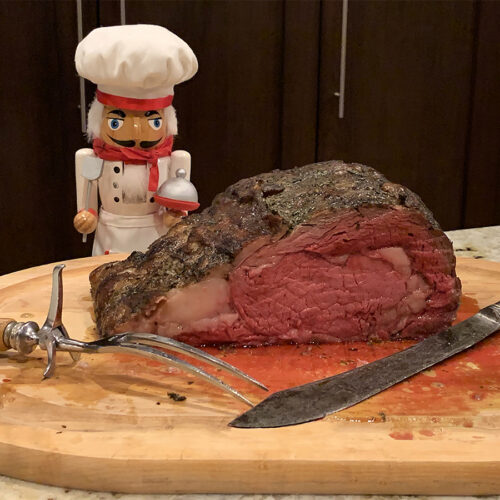
Sous Vide Prime Rib Roast & Horseradish Sauce

Equipment
- Sous Vide Device
Ingredients
Sous Vide Prime Rib Roast
- 7-9 Pound Prime Rib Roast (3 rib bones, boneless will work too)
- 12 Garlic Cloves (minced)
- 4 Tablespoons Fresh Parsley (minced)
- 2 Tablespoon Fresh Rosemary (minced)
- 2 Tablespoons Olive Oil (or canola, avocado or other high heat oil)
- Kosher Salt and Black Pepper to taste
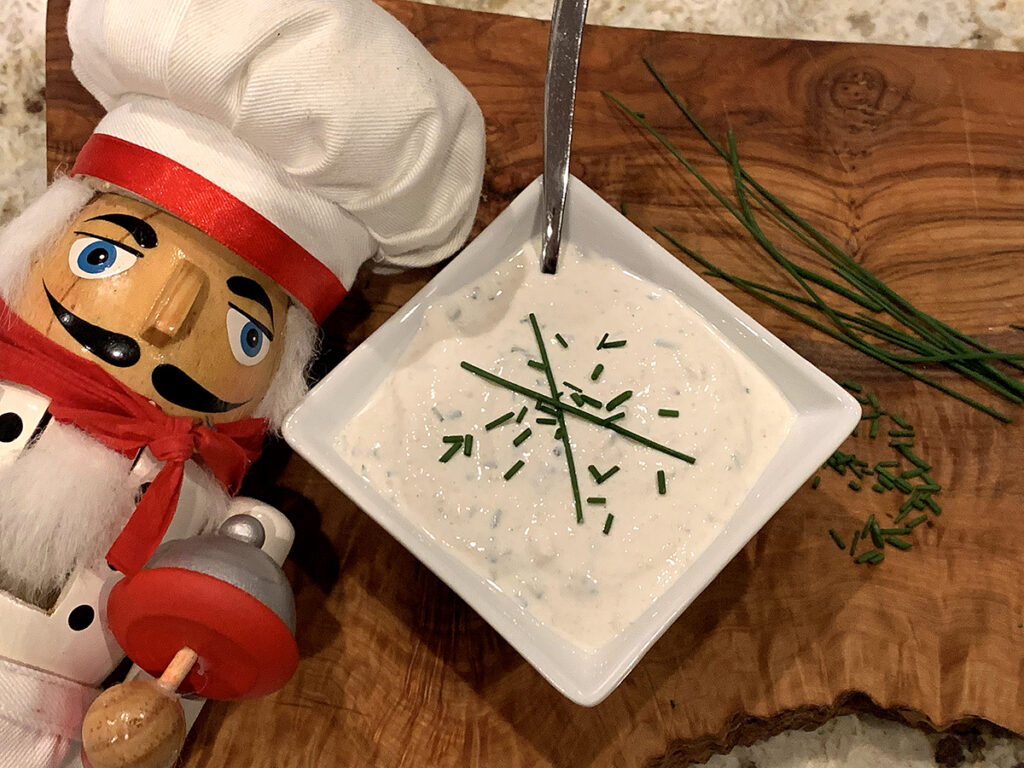
Sour Cream Horseradish Sauce
- 1 Cup Sour Cream
- 1/4 Cup Prepared Horseradish
- 2 Tablespoons Milk
- 1 Tablespoon Fresh Chives (or 1 1/2 tabelspoons dried chives)
- 1/4 Teaspoon Ground White Pepper
Instructions
Sous Vide Prime Rib Roast
- Prepare your water bath in a container large enough to fit your roast. Keep in mind that you’re going to add a huge hunk of meat, so don’t fill it all the way. Maybe only half or a bit less full.
- Set temp for 136°F. Anything from 132°F to 145°F will work – it just depends on how rare or well done you want it. I think it’s better to under cook it because you can always cook it more if it’s not done enough for you.
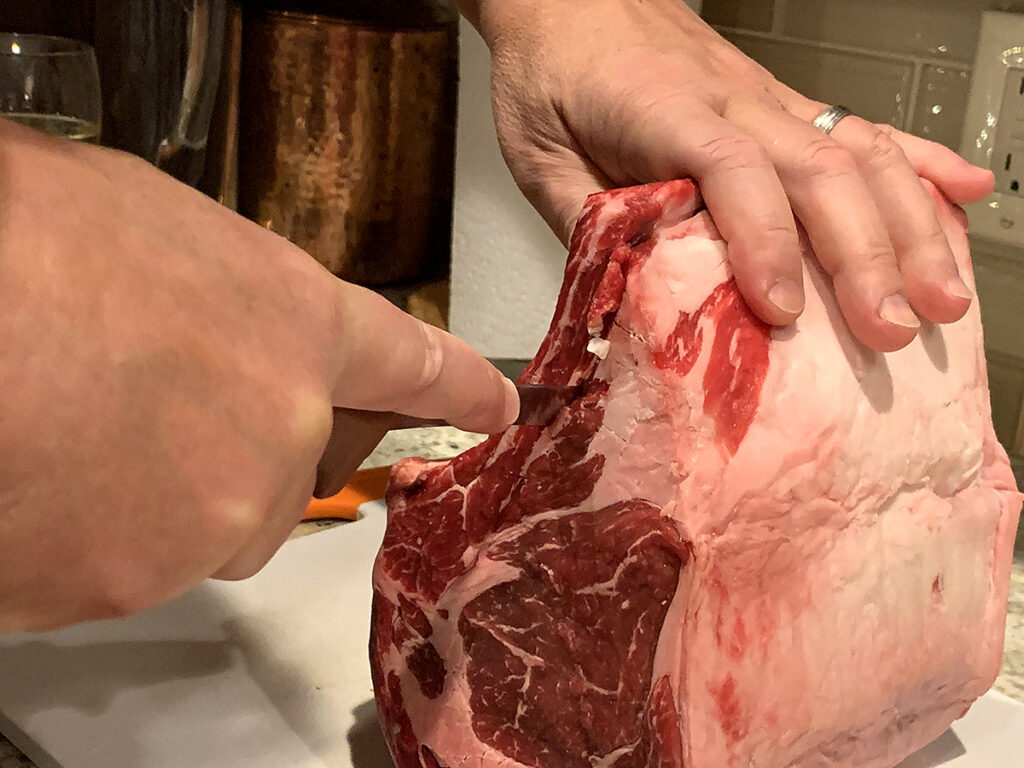
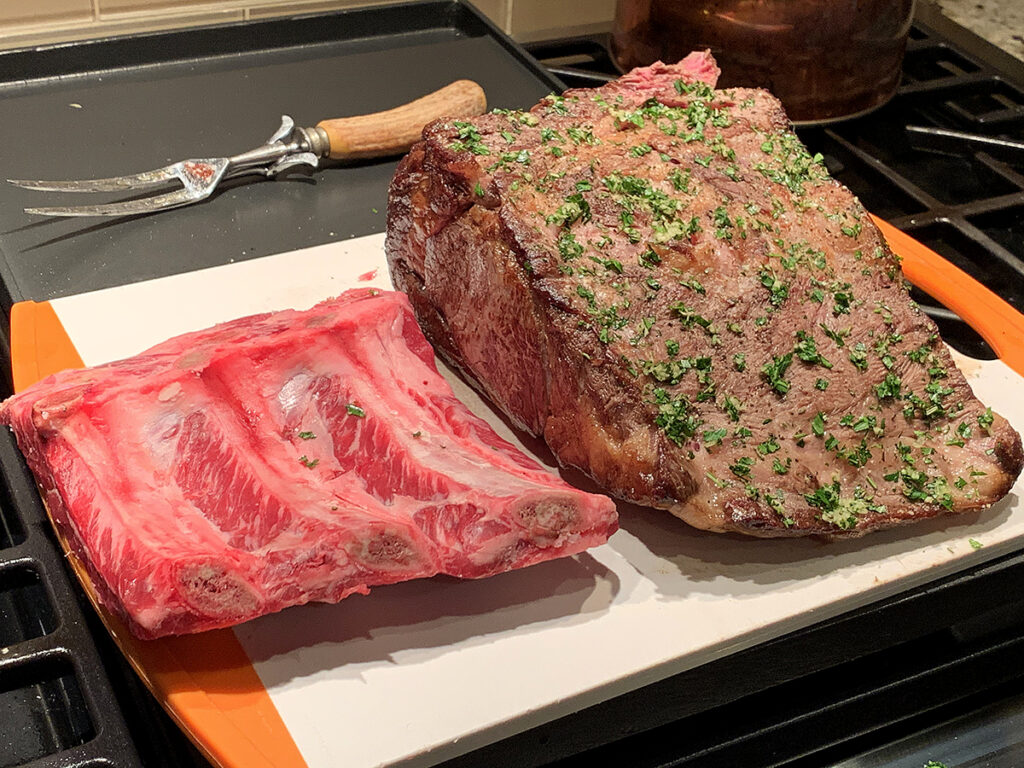
- Either ask your butcher separate the rib bones or remove them yourself, but keep them because they will be tied back on and cooked. Plus they make great beef stock later.To remove the bones, cut along the contour of the bones with a sharp knife keeping as much meat on the roast as possible. Set bones aside for now.
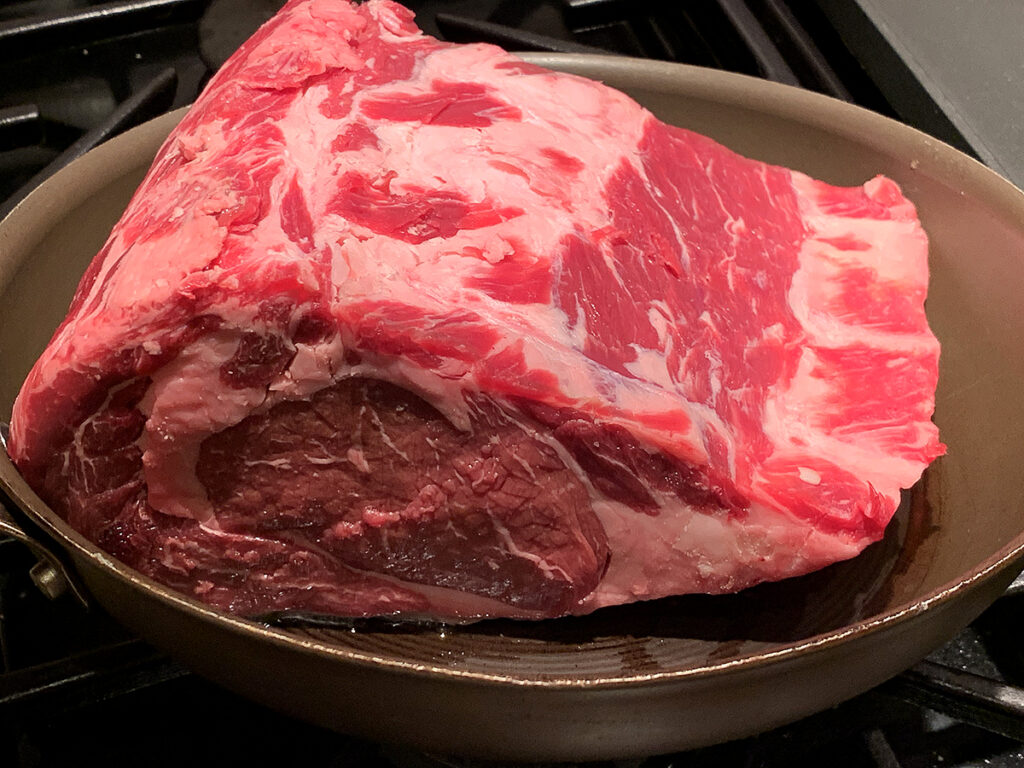
- Heat a large skillet on high and add oil until just starting to smoke. Sear roast on all sides until nicely browned (about 2 minutes each side). Transfer from skillet to large cutting board.
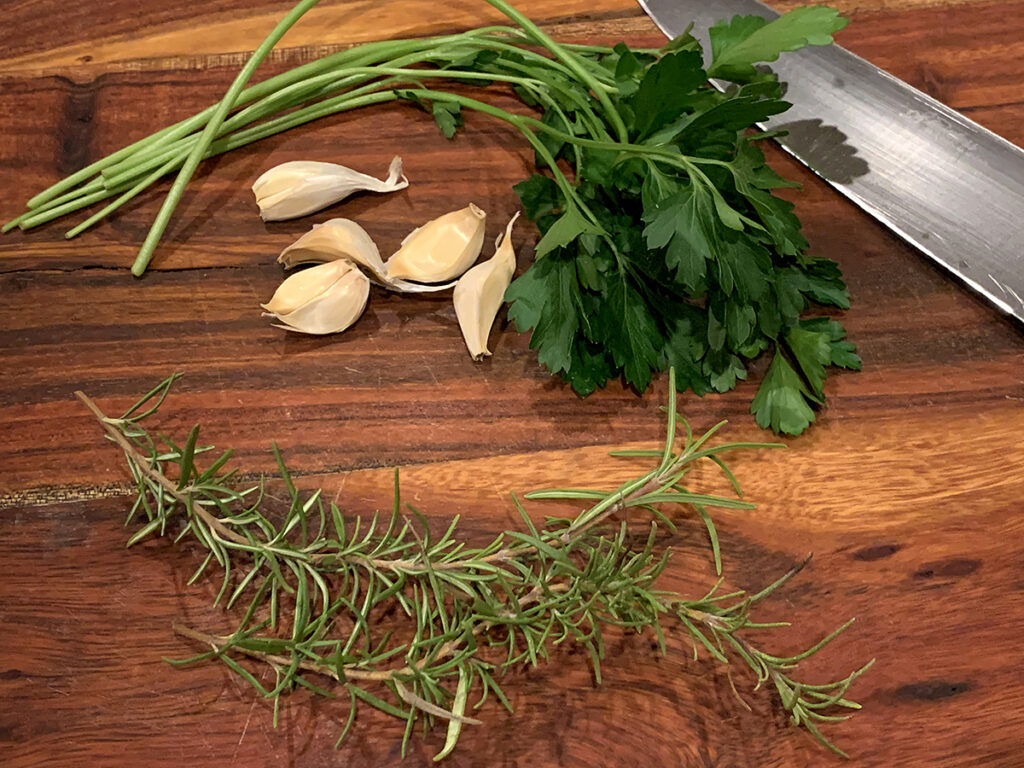
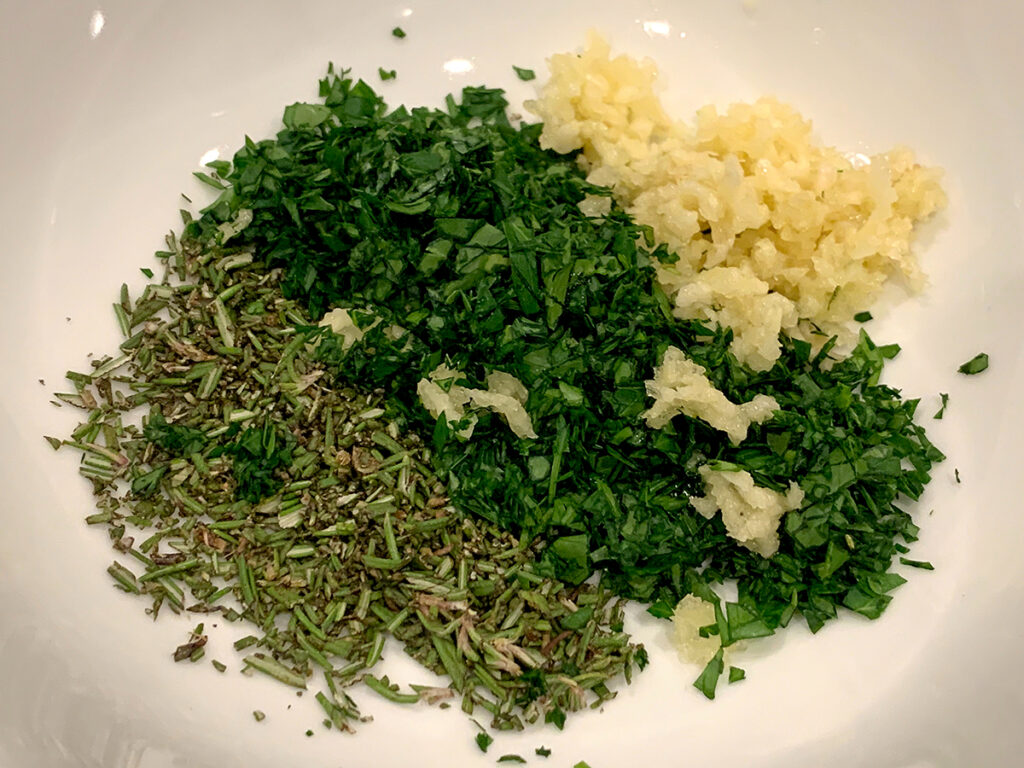
- Mince all garlic and herbs and stir them together, then rub all over the seared roast.
- Season the roast heavily with kosher salt and pepper, and tie the bones back onto the roast with kitchen twine.
- Double bag rib roast in 2-gallon freezer bag, or the equivalent in vacuum seal bags to prevent bag from getting pierced a causing leakage. Remove as much air as possible from the bags or as you can.
- Cook for 6-8 hours.
- Preheat oven to 475°F convection (or 485°F if you don’t have convection). Place rib roast in roasting pan and roast for 10-15 minutes (optional). Remove from pan, let rest on carving board while tented with foil for 5-10 minutes before carving.
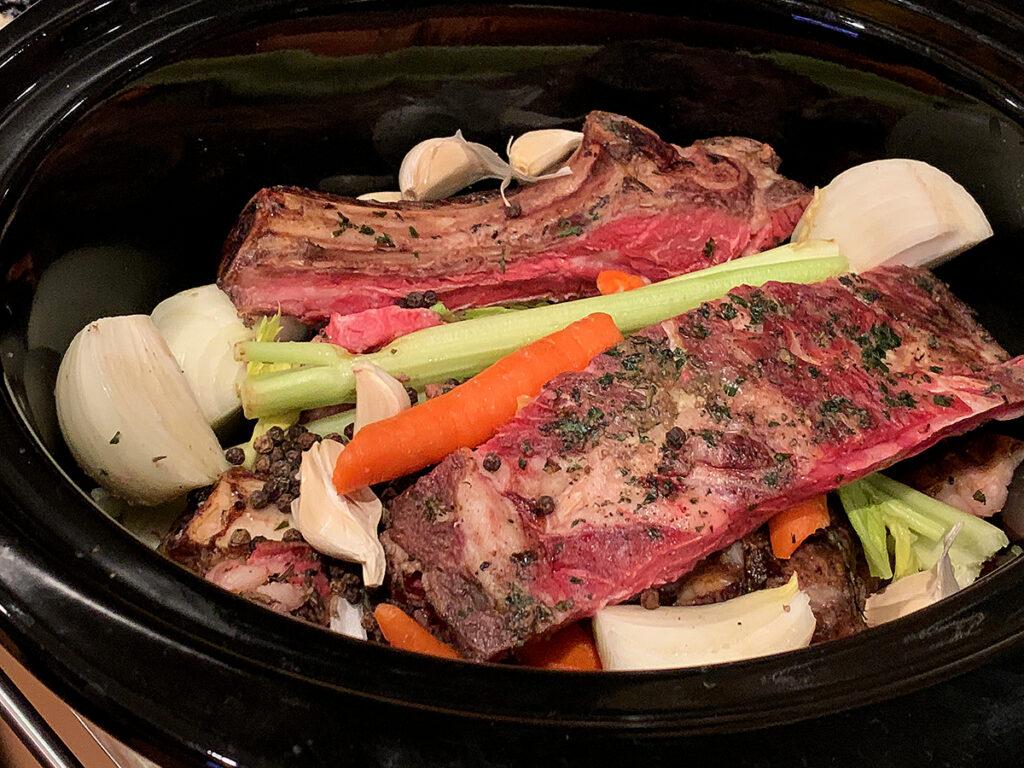
- Do not throw away the bones. Make some amazing beef stock instead. Follow this recipe, except use the bones from the rib roast.
Sour Cream Horseradish Sauce
- Stir all ingredients together and refrigerate for 1 hour or up to 2 days in advance.
Notes
Step-by-Step Instructions
Prepare your water bath in a container large enough to fit your roast. Keep in mind that you’re going to add a huge hunk of meat, so don’t fill it all the way. Maybe only half or a bit less full.
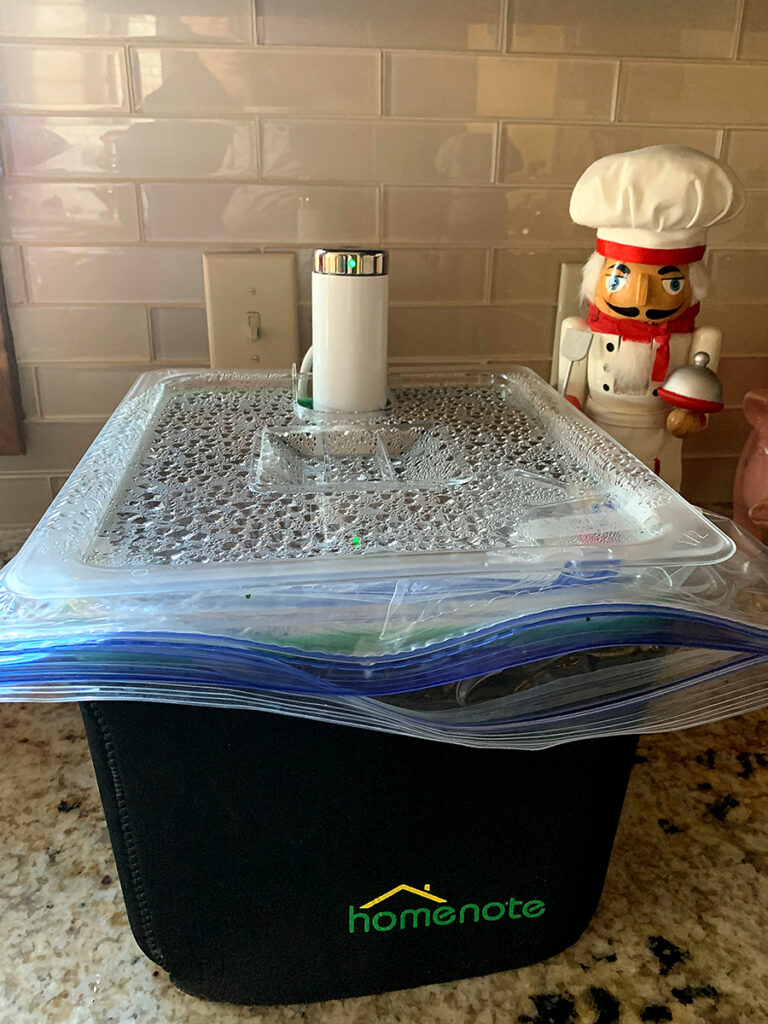
Set temp for 136°F, but anything from 132°F to 145°F will work – it just depends on how rare or well done you want it. I think it’s better to under cook it because you can always cook it more if it’s not done enough for you.
Either ask your butcher separate the rib bones or remove them yourself, but keep them because they will be tied back on and cooked. Plus they make great beef stock later.
To remove the bones, cut along the contour of the bones with a sharp knife keeping as much meat on the roast as possible. Set bones aside for now.
Heat a large skillet on high and add oil until just starting to smoke. Sear roast on all sides until nicely browned (about 2 minutes each side). Transfer from skillet to large cutting board.
Mince all garlic and herbs and stir them together, then rub all over the seared roast.
Season the roast heavily with kosher salt and pepper, and tie the bones back onto the roast with kitchen twine.
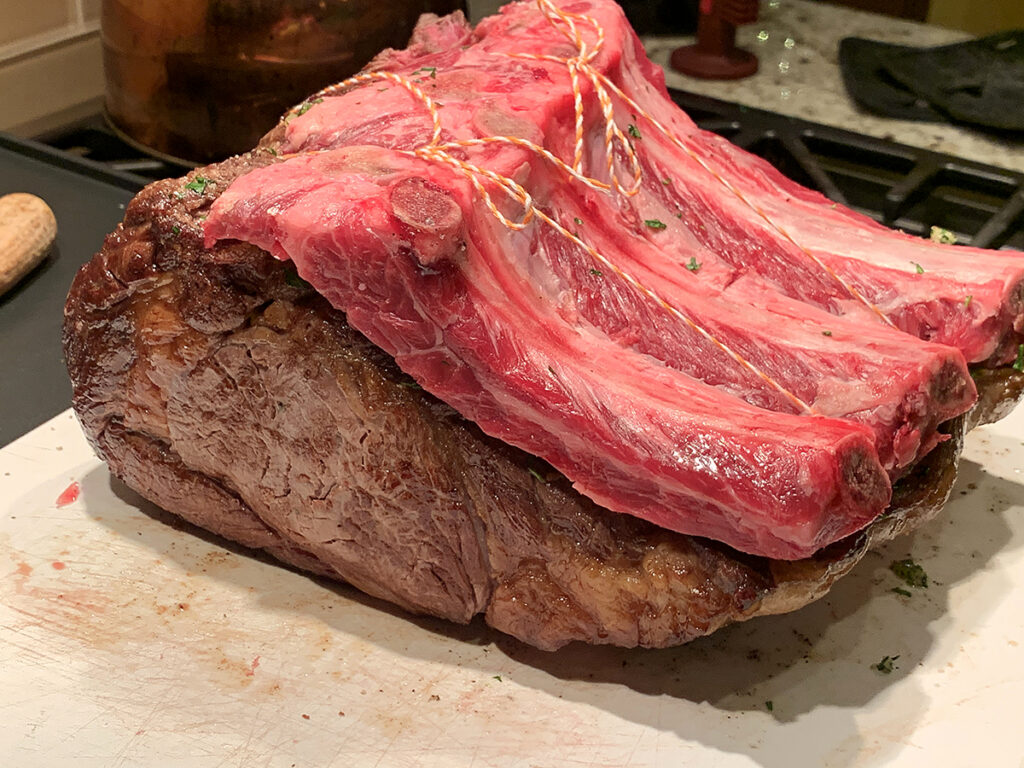
Double bag rib roast in 2-gallon freezer bag, or the equivalent in vacuum seal bags to prevent bag from getting pierced a causing leakage. Remove as much air as possible from the bags or as you can.
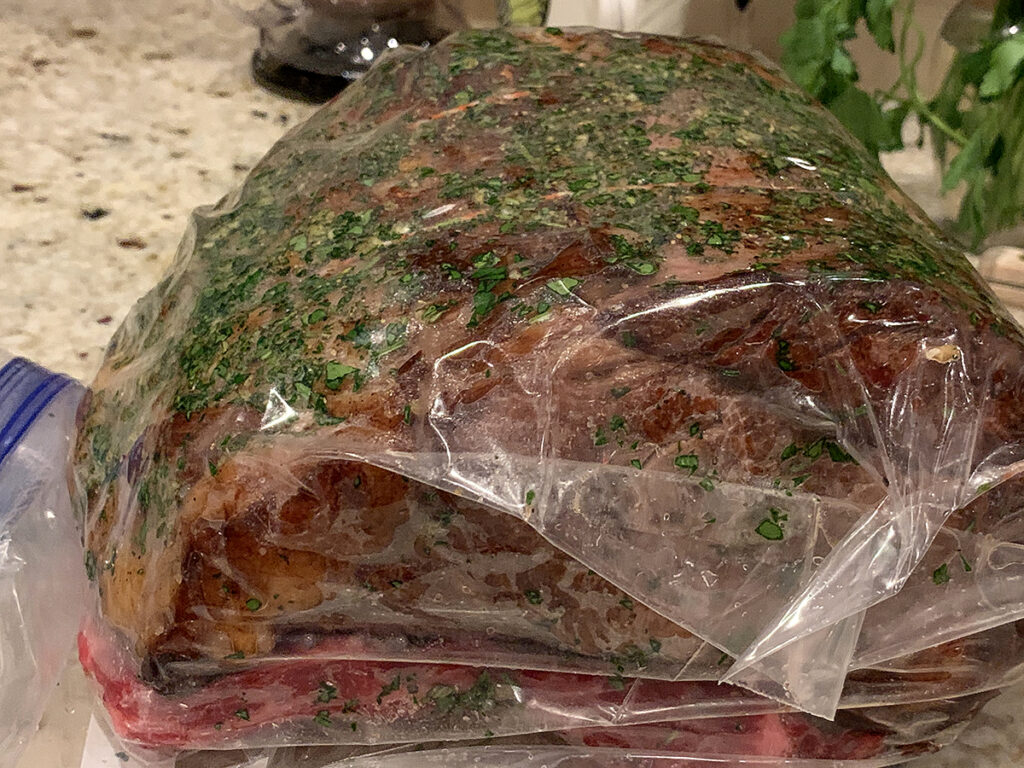
Cook for 6-8 hours.
Preheat oven to 475°F convection (or 485°F if you don’t have convection). Place rib roast in roasting pan and roast for 10-15 minutes (optional).
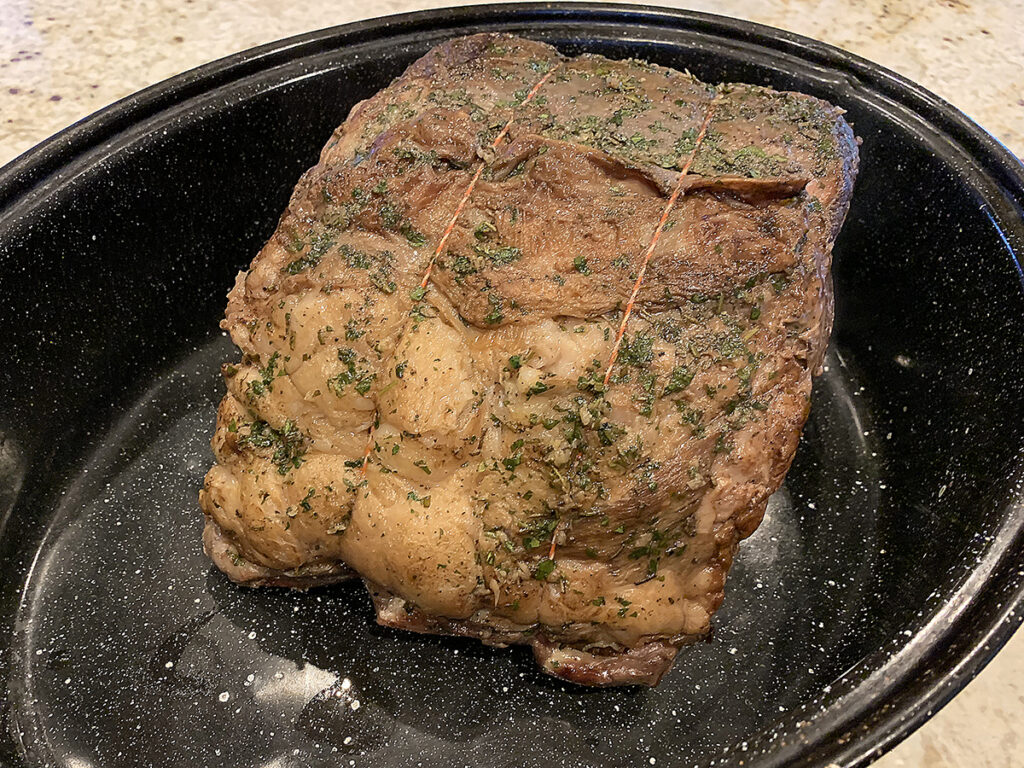
Remove from pan, let rest on carving board while tented with foil for 5-10 minutes before carving.
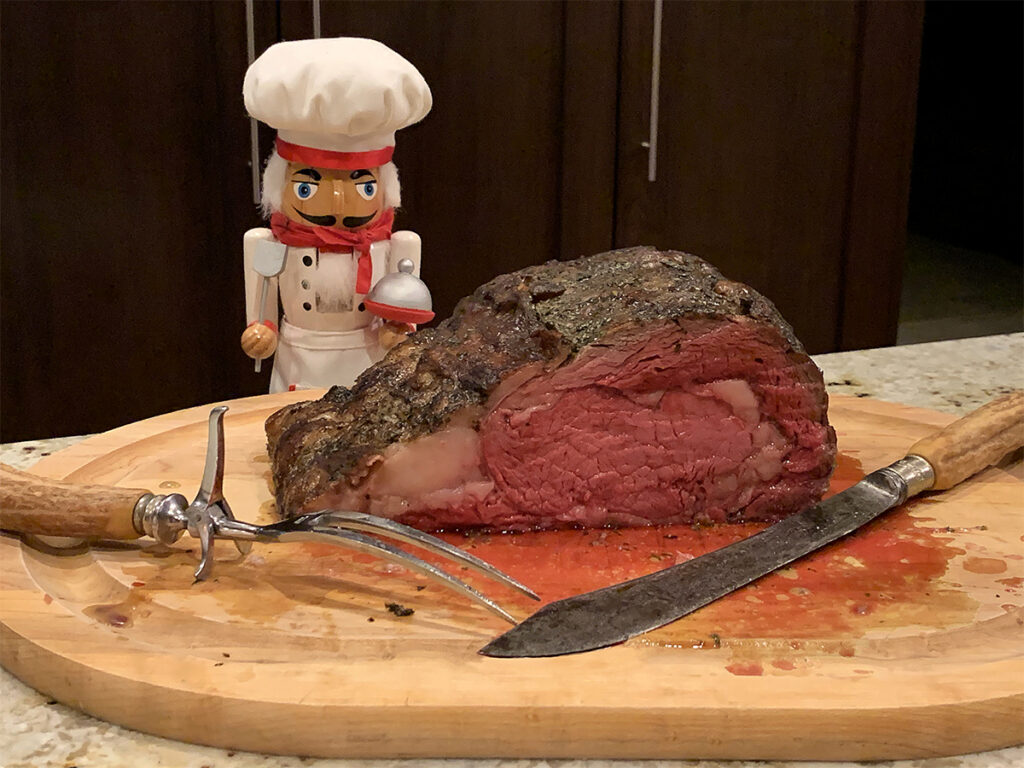
Serve with Horseradish Sour Cream & Chive Sauce.
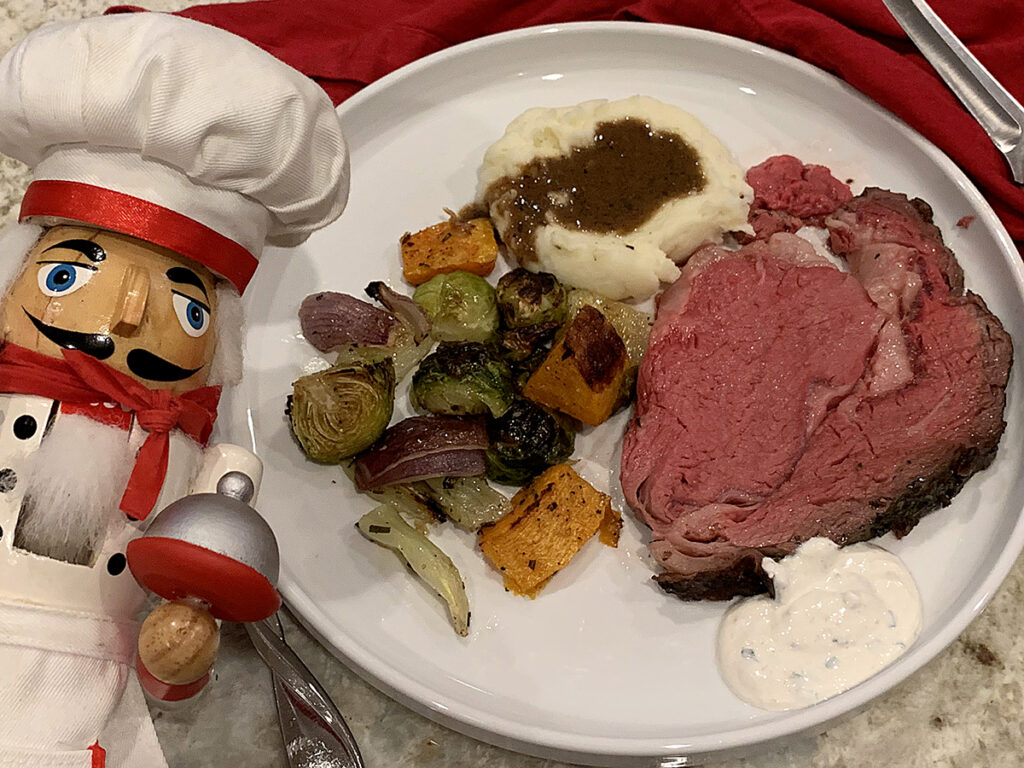
Bon Appétit!
Use those bones to make the best stock ever!
Do not throw away the bones. Make some amazing beef stock instead. Follow our Easy Slow Cooker Chicken Stock Recipe, except use the bones from the rib roast instead of the chicken bones.